
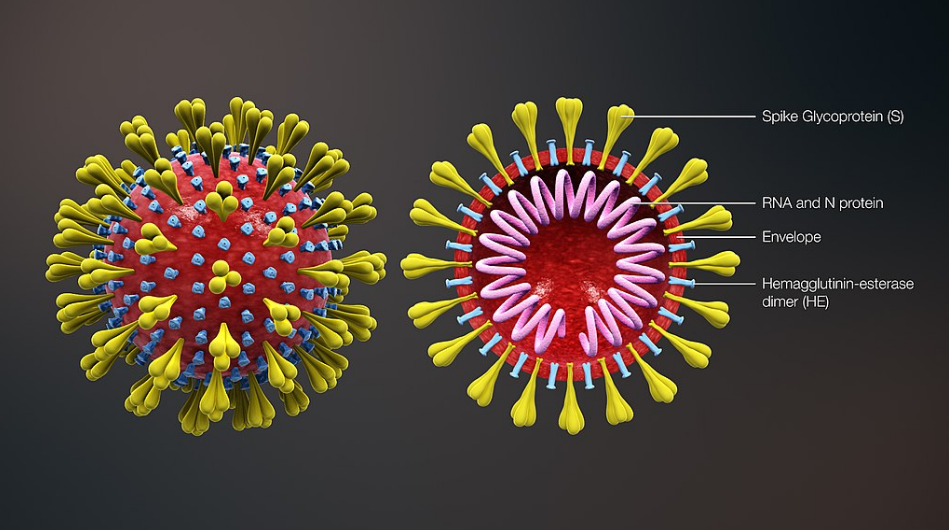
What is Coronavirus?
A coronavirus is one of many viruses that cause diseases in mammals and birds. In humans, coronaviruses cause respiratory tract infections that are typically mild, such as the common cold, though rarer forms such as SARS, MERS and COVID-19 can be lethal. Symptoms vary in other species: in chickens, they cause an upper respiratory tract disease, while in cows and pigs they cause diarrhea. There are no vaccines or antiviral drugs to prevent or treat human coronavirus infections.
What is Coronavirus Disease 2019 (COVID-19)?
Coronavirus disease 2019 (COVID-19) is an infectious disease caused by SARS-CoV-2, a virus closely related to the SARS virus.
In February 2020, World Health Organisation (WHO) named the disease caused by the novel coronavirus, which killed thousands of people in China, as: COVID-19.
What does COVID-19 mean?
COVID-19 is an acronym. In COVID-19; CO stands for corona, VI stands for virus, D for disease, and 19 refers to 2019.
The naming of a new disease is a tricky balancing act. The WHO Director General Dr. Tedros Adhanom Ghebreyesus explained at a news conference on Tuesday, “We had to find a name that did not refer to a geographical location, an animal, an individual or group of people, and which is also pronounceable and related to the disease. Having a name matters to prevent the use of other names that can be inaccurate or stigmatizing.”